| 01 November 2008
Before 21 October 1993, Maison Shalom does not exist but it is as if Marguerite Barankitse’s life has been preparing her for what is to come. In line with the hospitable tradition of her mother Therese, she has already adopted 7 Hutu and Tutsi orphans, one of which, Chloé Ndayikunda, had lost her parents during the ethnic killings of 1972. (Following violent actions against Tutsis in the South of Burundi in 1972 there had been large scale killings by the Tutsies in power of ethnic Hutus, in particular Hutu intellectuals, all over the country).
In 1993, democratic elections in Burundi lead to a landslide victory of the Hutus who win 84% of the votes. For the first time in Burundi, Hutus accede to government. However, the army remains mostly Tutsi and rapidly destabilizes the new government. President Melchior NDADAYE is assassinated on 21 October 1993, which sparks off a hunt against Tutsis, in which thousands are killed within a few days.
Maggy’s family flees but she stays on in solidarity with her Hutu children, which she refuses to abandon. Rapidly civil war escalates and a vicious circle of interethnic repression and retaliation begins. Maggy is caught between the two camps and in constant danger. The ethnic groups tear each other apart and families disappear, leaving behind orphans, many wounded people as well as destroyed houses. People hide as they can. Maggy estimates that the Diocese is safe, but in such a situation no place is respected and hatred causes people to become like wolves.
On 22 October Maggy finds refuge in the Diocese with dozens of women, children and men, mostly Hutus. In the morning of 24 October, hell breaks out as Tutsi men armed with machetes, bamboos, stones etc. attack the Diocese. Maggy tries to stop them but is finally forced to watch helplessly as 72 Hutus are massacred, leaving behind, among others, orphans like Lydia and Lysette, aged one and three years old.
25 children escape and turn to Maggy for help as it is impossible for them to flee to Tanzania like other Hutus. In such conditions, it is not easy to find food and shelter for 25 children. Maggy seeks and miraculously finds help from a German who puts his house at their disposal. She manages to feed the children from food produced on her family’s property and is helped by local and international solidarity, institutions and friends she had established contact with during a stay in Europe.The crisis shakes up the whole country and in particular the Ruyigi province. Children close to starvation, some wounded, some raped, and disoriented orphans start arriving first from all corners of the province, then also from other parts of the country and eventually even from other countries around the great lakes where ethnic conflict is rife, such as the Congo and Rwanda. Most of them have seen their parents killed by neighbors and are deeply traumatized.
In May 1994, the Diocese lends Maggy rooms in its former technical trade school. The children call it “Maison Shalom”. (During the war National Radio – the only radio station in Burundi – plays religious songs and it is from one of these the children draw the name Shalom, which means Peace). In the beginning Maggy thinks that war would soon end and that the children could soon be reunited with their extended families. But Hutus who had fled to Tanzania organize a rebellion and repeated attacks throughout the country. Young Tutsis on the other hand are enrolled in a militia (“Sans-échecs”) and commit murders. Maggy decides as a consequence to cultivate the soil with the children to provide food. Maison Shalom is one of the very few places in Burundi where Hutu, Tutsi and Twa children and adults continue to live together peacefully. As more and more children are taken care of, an organization imposes itself where the older ones look after the younger ones, according to the principle of mutual help independently from ethnic, religious and social differences. Maggy is the grandmother of all these children who affectionately call her O’MA (Oma means grandmother in German).{mosimage}
Until 2003, Ruyigi remains the most dangerous region in the country where the army and rebels clash daily obliging the population to flee from their villages and hills. In this context, Maggy redoubles her efforts to approach victims, care for and save people.In February 2005, Butezi, a town located 20 km from Ruyigi is attacked by rebels. The Italian Cooperation present in that area is forced to flee from the war but puts its premises at Maggy’s disposal. 70 to 80 children find a shelter in what they name “Casa della pace”, which means House of Peace in Italian. Unfortunately continued unrest and insecurity in Butezi force Maggy to close down the place and to repatriate the children to Maison Shalom.In August 1995, Maggy takes over the premises of the parish of Gisuru, a town located 60 km from Ruyigi near the Tanzanian border, with the aim to be close to populations menaced both by the army and rebels who attack from Tanzania. Rwandan children of the “interahamwe” militia who had taken part in the genocide of 1994 in Rwanda are cared for here as well.Between 1995 and 2000, Maggy continues to approach the poorest and to visit people in prisons and hospitals. Several adults join Maggy as “BIBIs” to extend human warmth to the children. Psychologist Prime BIGIRIANDAVYI joins the team. It is necessary to reconstruct souls, learn to forgive, express sadness, dare give testimony, remove hatred within oneself, learn have a loving regard on others. To be able to nourish her growing community and to create working opportunities, Maggy decides to create money generating activities, starting with the Guest House Frieden (a hotel-restaurant), an agro-pastoral center, a manioc mill, a bakery and a sewing shop.
Between 2001 and 2003, Maison Shalom also decides to open a Health Care Center to tend to the childrens’ needs. As a first consequence of war, AIDS becomes the greatest enemy of the population. Maison Shalom is not spared: many children are HIV positive and care is extended also to AIDS infected adults. Misery, poverty and promiscuity are the principal cause. Today ¾ of young children taken care of by Maison Shalom are infected with the AIDS virus, whose treatment demands great efforts and major financial means.
{mosimage}In 2003, with the help of French journalist Thierry Nutchey, the “Cinema des Anges” is set up in Ruyigi, equipped with 100 places and modern equipment to offer the young people of Ruyigi a window to the wider world and to create more working places. The cinema is integrated into a vast center comprising a swimming pool, a festivity hall, a library for children and adults, a sewing shop, a hairdressing salon, an English training center, a food shop, a fitness room as well as a computer training room. At the same time, Maison Shalom starts constructing houses in the center of Ruyigi for newly created family units (“fratries”). Their comfort is improved by electrification and water supply. The children now live in these houses, which allows Maison Shalom to move from the former Diocese School to its own buildings: the headquarters of Maison Shalom.Today thousands of children and young adults benefit directly or indirectly from Maison Shalom. The ONG employs more than 120 people. The Hospital REMA inaugurated in 2008 offers more than 100 beds. It employs more than 120 staff and further services are planned already.More projects are under way to guarantee a sustainable future to the children from Ruyigi and beyond. The priorities of Maison Shalom
♣Care for orphaned children
♣Psycho-social care for traumatized children
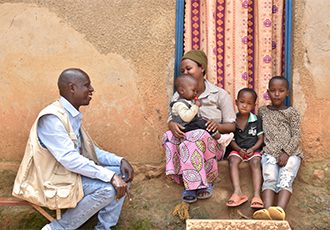
♣Search for family members and reintegration of children in their communities
♣Reintegration of former child-soldiers
♣Health care and prevention
♣Prevention and awareness building to fight against AIDS
♣Assistance to victims of rape
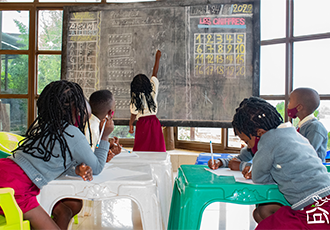
♣Schooling and education for children
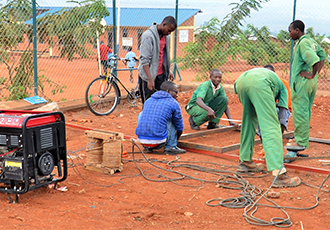
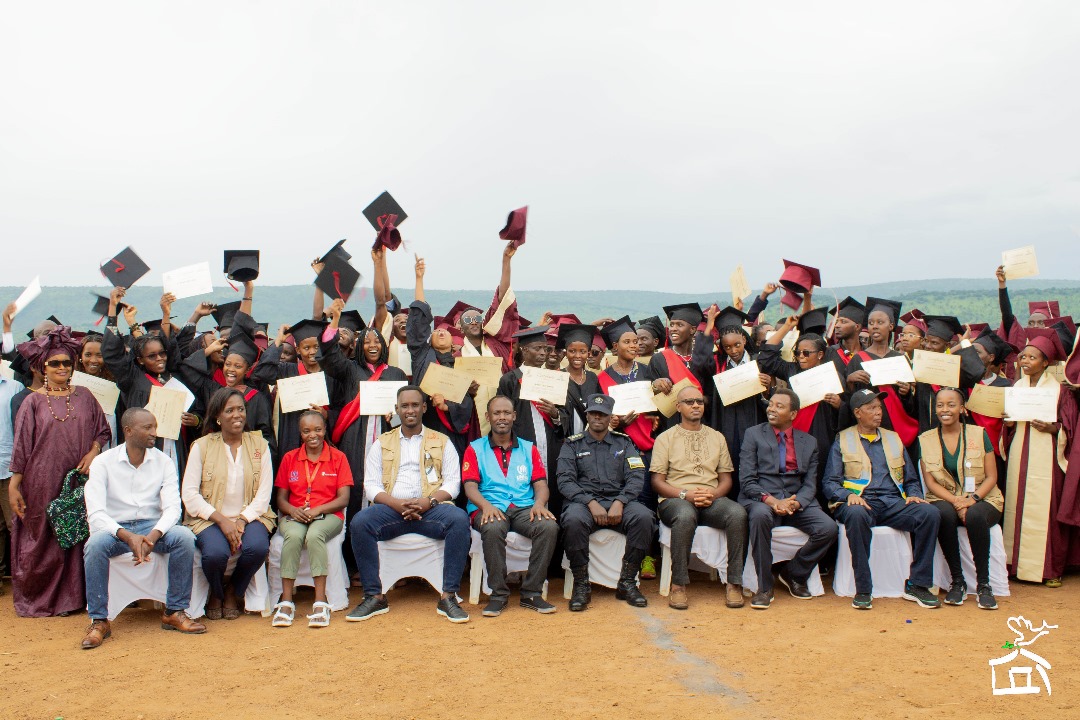
♣Creation of work and training opportunities for young adults
♣Promotion of forgiveness, peace and reconciliation